Acoustic Guitar
Roles of Personnel:
Ryan Hobin- Ryan will be in the control room. He will be
using Cubase and the Mackie 1640i desk in order to record the guitar. It will
be Ryan’s job to give constructive criticism and decide whether or not retakes
are required. Ryan will communicate with the performer and set up man via the
talkback device. The skills required are good listening skills in order to
assess the sound quality and other factors of recording. He must also have good
communication skills in order to properly explain and identify what he wants
the performer/set up man to change and how.
Hayden Bridgen- Hayden will be setting up mics and other
equipment in the recording space. He will be in charge of deciding which
microphones are best suited for the sound being recorded give the current
environment. He will also be in charge of connecting the equipment in the
performance area to the control room. He will also guide the performer in hoe
they should position themselves and their instrument. Hayden must have good
knowledge of microphone theory in order to be able to effectively decide which
microphones should be used and how. He must know where mics should be
positioned.
Lewis Jones-Lewis will be playing the guitar for our
recordings. His responsibilities are mainly to ensure that the recording
displays each note potently and that they are of a good sonic quality. Lewis
will have to have a good knowledge of mic/guitar relations and how they should
be used and set up together in order to achieve a professional sound quality.
We will use 2 AKG C100S microphones to record the guitar, as
they are condenser microphones. We will use these as they have a much better
high frequency response when compare to dynamic mics such as the SM58. High
frequencies are vital to making a good quality acoustic guitar recording.
Some problems that may occur include equipment failure such
as a cable or microphone breaking. There may also be problems with the Cubase
software can computers can sometimes be unreliable. We may also have to do many
recordings, which may cause us to become stressed. We have to stay focused and
calm in order to achieve the best results possible. Time restrictions are also
a problem so we will have to be time efficient with our recordings.
Electric Guitar
Roles of Personnel:
Ryan Hobin- Ryan will be in the control room. He will be
using Cubase and the Mackie 1640i desk in order to record the guitar. It will
be Ryan’s job to give constructive criticism and decide whether or not retakes
are required. Ryan will communicate with the performer and set up man via the
talkback device. The skills required are good listening skills in order to
assess the sound quality and other factors of recording. He must also have good
communication skills in order to properly explain and identify what he wants
the performer/set up man to change and how.
Hayden Bridgen- Hayden will be setting up mics and other
equipment in the recording space. He will be in charge of deciding which
microphones are best suited for the sound being recorded give the current
environment. He will also be in charge of connecting the equipment in the
performance area to the control room. He will also alter the positioning of the
amplifier if necessary. Hayden must have good knowledge of microphone theory in
order to be able to effectively decide which microphones should be used and
how. He must know where mics should be positioned.
Lewis Jones-Lewis will be playing the guitar for our
recordings. His responsibilities are mainly to ensure that the recording
displays each note potently and that they are of a good sonic quality. Lewis
will have to have a good knowledge of mic/guitar/amp relations and how they
should be used and set up together in order to achieve a professional sound
quality.
We will use 1 SHURESM58 dynamic microphone in order to
record the amp as it can handle a much higher SPL than a condenser mic, this
will be needed as a highly distorted electric guitar has a much higher SPL than
an acoustic guitar
Some problems that may occur include equipment failure such
as a cable or microphone breaking. Also amps can be unreliable at times and so
we may have issues with that equipment too. There may also be problems with the
Cubase software can computers can sometimes be unreliable. We may also have to
do many recordings, which may cause us to become stressed. We have to stay
focused and calm in order to achieve the best results possible. Time
restrictions are also a problem so we will have to be time efficient with our
recordings.
Glockenspiel
Roles of Personnel:
Ryan Hobin- Ryan will be in the control room. He will be
using Cubase and the Mackie 1640i desk in order to record the guitar. It will
be Ryan’s job to give constructive criticism and decide whether or not retakes
are required. Ryan will communicate with the performer and set up man via the
talkback device. The skills required are good listening skills in order to
assess the sound quality and other factors of recording. He must also have good
communication skills in order to properly explain and identify what he wants
the performer/set up man to change and how.
Lewis Jones- Lewis will be setting up mics and other
equipment in the recording space. He will be in charge of deciding which
microphones are best suited for the sound being recorded give the current
environment. He will also be in charge of connecting the equipment in the
performance area to the control room. He will also guide the performer in hoe
they should position themselves and their instrument. Lewis must have good
knowledge of microphone theory in order to be able to effectively decide which
microphones should be used and how. He must know where mics should be
positioned.
Hayden Bridgen-Hayden will be playing the glockenspiel for
our recordings. His responsibilities are mainly to ensure that the recording
displays each note potently and that they are of a good sonic quality. Hayden
will have to have a good knowledge of mic/percussion relations and how they
should be used and set up together in order to achieve a professional sound
quality.
We will use a SHURESM58 mic in order to record the
glockenspiel as it has can handle the higher SPL levels of the glockenspiel
well and create a more delicate sounding recording in comparison to the harsh
sound condenser microphone recordings. The shure can also handle higher pitches
unlike the deep range D112 mic, this makes it the ideal choice for recording
the glockenspiel.
Some problems that may occur include equipment failure such
as a cable or microphone breaking. There may also be problems with the Cubase
software can computers can sometimes be unreliable. We may also have to do many
recordings, which may cause us to become stressed. We have to stay focused and
calm in order to achieve the best results possible. Time restrictions are also
a problem so we will have to be time efficient with our recordings.
Recording Evaluations
One of the first tasks in my music BTEC was to find out the definitions of certain key terms that are important in sound recording.
Transducer
A device that converts variations in a physical quantity such as pressure or brightness, into an electrical signal, or vice versa - e.g a microphone.
Diaphragm
A thin disk in a microphone or telephone receiver that vibrates to produce electric signals
Electromagnetic Induction
The Production of an electromotive force across a conductor when it is exposed to a time varying magnetic field
Capacitor Plate
An electronic component that stores an electric charge and releases it when required
Pre-amp
An electronic device that amplifies a weak signal
Sound pressure levels
A measurement of Sound Pressure, measured in dB
Condenser Mic
These mics let sound waves vibrate the diaphragm. In this mic they are in front of an electrically charged plate. These mics are used with instruments that have a lower sound pressure level such as acoustic guitar.

Dynamic Mic
Recording Evaluations
One of the first tasks in my music BTEC was to find out the definitions of certain key terms that are important in sound recording.
Transducer
A device that converts variations in a physical quantity such as pressure or brightness, into an electrical signal, or vice versa - e.g a microphone.
Diaphragm
A thin disk in a microphone or telephone receiver that vibrates to produce electric signals
Electromagnetic Induction
The Production of an electromotive force across a conductor when it is exposed to a time varying magnetic field
Capacitor Plate
An electronic component that stores an electric charge and releases it when required
Pre-amp
An electronic device that amplifies a weak signal
Sound pressure levels
A measurement of Sound Pressure, measured in dB
Condenser Mic
These mics let sound waves vibrate the diaphragm. In this mic they are in front of an electrically charged plate. These mics are used with instruments that have a lower sound pressure level such as acoustic guitar.
Dynamic Mic
These mics work by letting sound waves vibrate a diaphragm. The voice coil wire on the back of the diaphragm then moves through a magnetic field created by a magnet inside the mic in order to create voltage. These are usually used to record higher SPL instruments such as electric guitar/drums.

We recorded a gockenspiele first to show how percussion intrusments could be recorded with different microphones. We first recorded using the SHURESM58 dynamic microphone. This is not only a popular choice for live vocalists, but also for instruments in and out of the studio. Dynamic microphones are often used for percussive instruments due to heir loud nature and high SPL. We recorded the glockenspiele from about 30cm away from the mic and using the MACKIE1640I we controlled the levels to create a sound we felt comfortable with. This was done in a sound proofed recording studio to minimise back noise and create a good quality clean sound. The mic was pointed directly at the glockenspiel as the SHURESM58 has a cardioid polar pattern which means that the sound is picked up most strongly from directly in front of the mic.
 https://soundcloud.com/user-401119215/glock-task-0004-audio-shure
We recorded a gockenspiele first to show how percussion intrusments could be recorded with different microphones. We first recorded using the SHURESM58 dynamic microphone. This is not only a popular choice for live vocalists, but also for instruments in and out of the studio. Dynamic microphones are often used for percussive instruments due to heir loud nature and high SPL. We recorded the glockenspiele from about 30cm away from the mic and using the MACKIE1640I we controlled the levels to create a sound we felt comfortable with. This was done in a sound proofed recording studio to minimise back noise and create a good quality clean sound. The mic was pointed directly at the glockenspiel as the SHURESM58 has a cardioid polar pattern which means that the sound is picked up most strongly from directly in front of the mic.
 https://soundcloud.com/user-401119215/glock-task-0004-audio-shure
After doing this we recorded it in the same location with a condenser mic, the AKGC100S. We did this to see how the different mics would change the way the recordings sounded. On this recording in comparison to the SHURESM58 the sound is a lot harsher and more brash. This may be due to the performer perhaps playing the glockenspiel louder, however it could also be due to the fact that it is a condenser mic which is not designed to record high SPL sound such as a glockenspiel. The AKGC1000S The AKG also uses a cardioid polar pattern which meant that we set it up by pointing it directly at the glockenspiel keys to make sure the sound is picked up strongly, The mic was once again set up at a 30cm distance from the glockenspiel as to create a good quality recording, however despite this the sound is still very tinny due to the high pitch of the instrument. When compared to the SHURESM58 recording the sound has much more sonic power and is a lot less gentle.
https://soundcloud.com/user-401119215/glock-task-0006-audio-akg-jth
We also used the AKGD112 in the soundproofed studio. This is another dynamic mic, and as such appears to be able to handle the high SPL of the glockspiel well. This one again gives it a much more gentle, soft sound. We set up the mic in the exact same way as the other mics as the polar pattern was once again cardioid meaning that the mic was pointed directly at the glockenspiel keys at a distance of 30cm. This caused the sound to be very similar to the SHURESM58 recording as they are both dynamic mics meaning they use a voice coil and a magnet to create voltage. However as the D112 is designed as a bass drum mic it is meant for picking up deep bassy sounds and so some of the higher notes on the recording can seem strained at times as the sound is already very tinny. Whereas some of the lower notes are a little more potent as the D112 gives its signature punchy effect to the notes.
https://soundcloud.com/user-401119215/glock-task-0005-audio-egg-jth
We found that the main flaws in these recordings were created by the performers and set up people in the room, this is why after we recorded some with mistakes in caused by people accidentally creating noise, the set up people left the room when recording in the future.
After doing these three recordings we then went outside to see how recording outside would affect the mics and the sound quality. We used the H2HANDYRECORDER to do our open air recordings as it has many different settings which change the current polar pattern. This allowed us to review different sound whilst using the same mic. At first we put it on the 120 degree setting, this gave a strong sound however it could not handle the high SPL of the glockenspiel and this combined with the background noise from the wind and other factors created a very distorted sound.
https://soundcloud.com/user-401119215/120-degree-jth
We then put in on the 2ch setting. This was even more distorted than the previous setting and picked up even more wind noise. This is because once again the SPL was way too high for the H2HANDYRECORDER to handle effectively. However in this recording the mic did give a much larger feel to the sound as there were no walls for the sound waves to bounce off, this is why the notes seemed to ring out for longer on this recording, despite the fact they were heavily covered at times by the distorted notes being played.
https://soundcloud.com/user-401119215/jth-2ch
After this we put it on the 4ch setting and went inside a class room. This setting was once again very distorted, and very similar to the 2ch recording in many ways. It gave a decent amount of reverb due to the enclosed, small space. However, in this recording there was much less background noise and virtually no audible wind noise affecting the mic for a majority of the recording.
https://soundcloud.com/user-401119215/4-ch-jth
We found that the main flaws in these recordings were for one the mic itself. The H2HANDYRECORDER could not handle SPL of the glockenspiel which is what gave it the dirty robotic style distortion. Another major issue was the background noise generated from being outside, such as engine noise from the road and wind noise. If I were to do open air recordings again I would do them in a much more isolated area to minimise man made noise, and perhaps do it on a less windy day, perhaps using something as a wind breaker to minimise air noise. However I am aware that by doing that I risk losing the open air sound I desire from open air as sound waves may bounce off the wind breaker.
We were then tasked with recording an acoustic guitar to try and effectively create a good quality sound recording. An acoustic guitar has a reasonably low SPL and also quite a high sound frequency, this lead us to believe that a condenser mic would be best suited for the task of recording the guitar. The guitar we used was interesting as it was a twelve string. This meant that the strings were doubled up similar to a mandolin which creates a much more delicate yet full
sounding acoustic noise, the frequency is also higher. We set up an AKGC1000S 30cm away pointing directly into the noise hole of the guitar in order to record the strongest and most clean sound as this is where the noise is released from. I believe that the choice of mic allowed for such a good recording as the notes are clearly distinguishable and somewhat sonically elegant. This was recorded in a sound proofed studio and run through a MACKIE1640I mixing desk so that we could control sound levels such as gain and mid range.
https://soundcloud.com/user-401119215/guitar-studio-0006-audio-audio
Some of the problems we found with the recording were that due to the fact we only used one microphone the sound was very flat and lacked some depth. Also, the levels could have been set up better as the guitar sounds almost as though it is a little too far away. One of the other problems is that the mic is picking up the clacking sound of the pick hitting the strings of the guitar, we planned to solve these problems for final recording in order to achieve a higher sonic quality.
The reason the AKGC100S worked much better for this instrument than it did for the glockenspiel is that the guitar had a much lower SPL than a glockenspiel which makes it a much more suitable recording subject for a small diaphragm condenser microphone such as the AKGC1000S. Which is why it sounds so much more clear and gentle than the glockenspiel recording of the same mic. (See second link from the top)
When we did our final recordings we decided what we would change for the acoustic guitar set up. We stayed recording in the sound proofed studio, but changed quite a lot of other factors. On the MACKIE1640I we raised the mid level and high range level. We also decided to use two mics instead of one, on pointed directly at the sound hole and one at the fretboard to pick up any vibrations further up the guitar, and then layer the two recordings over each other in order to create more depth of sound with a much higher sonic quality, we also moved the mics slightly closer to the guitar to try and remove the sound of distance we had previously. I believe that we succeeded in this as the quality of the recording is much clearer. Also the sound of the pick clacking against the strings is much less noticeable and seems to blend into the sound much more, however we did have an issue with the buttons of the guitarists clothes banging against the wood of the guitar, as can be heard in the recordings. However despite this i believe the sound quality is much higher.
Sound Hole
Fret Board
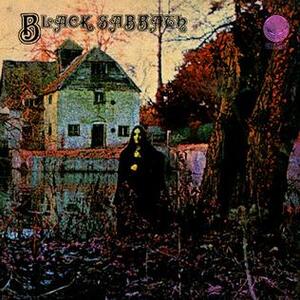
We also decided to record an electric guitar in the studio as well. Using what I had learned from my research into the early and modern recordings of Black Sabbath and AC/DC, whose music prominently features electric guitar as an essential component, i was able to try and recreate some of the methods they used in order to try and create a thick heavy sound similar to the styles of heavy metal and hard rock. I did this by setting up one dynamic mic against the amp with large amounts of gain and distorsion to create the crunchy coarse sound of a metal guitar. In order to make the sound darker and more deep, pointed the mic at and angle towards the wall of the speaker cone in the amp, as pointing it directly towards the cone can create a brighter feel, an undesirable effect in the genre. We also set up a mic around 20ft away as an ambient mic, a technique used by the sound engineer Tom Allom when recording Black Sabbath's first album. This created a larger room effect and also created a more reverberated sound. It also picked up any acoustic reflecting from surfaces in the room. We used a condenser mic for this as the SPL the mic was receiving was much lower than that of the dynamic amp mic. One problem we encountered was that as the guitarist was in the same room as the amp being recorded, there was some background noise of the pick hitting the strings. If we had access to the facilities we would hook the guitar up to an amp in a separate sound proofed room with only the mics in order to create a pure sound with zero background noise corruption.
Amp
Ambient
We also used the AKGD112 in the soundproofed studio. This is another dynamic mic, and as such appears to be able to handle the high SPL of the glockspiel well. This one again gives it a much more gentle, soft sound. We set up the mic in the exact same way as the other mics as the polar pattern was once again cardioid meaning that the mic was pointed directly at the glockenspiel keys at a distance of 30cm. This caused the sound to be very similar to the SHURESM58 recording as they are both dynamic mics meaning they use a voice coil and a magnet to create voltage. However as the D112 is designed as a bass drum mic it is meant for picking up deep bassy sounds and so some of the higher notes on the recording can seem strained at times as the sound is already very tinny. Whereas some of the lower notes are a little more potent as the D112 gives its signature punchy effect to the notes.
https://soundcloud.com/user-401119215/glock-task-0005-audio-egg-jth
We found that the main flaws in these recordings were created by the performers and set up people in the room, this is why after we recorded some with mistakes in caused by people accidentally creating noise, the set up people left the room when recording in the future.
After doing these three recordings we then went outside to see how recording outside would affect the mics and the sound quality. We used the H2HANDYRECORDER to do our open air recordings as it has many different settings which change the current polar pattern. This allowed us to review different sound whilst using the same mic. At first we put it on the 120 degree setting, this gave a strong sound however it could not handle the high SPL of the glockenspiel and this combined with the background noise from the wind and other factors created a very distorted sound.
https://soundcloud.com/user-401119215/120-degree-jth
We then put in on the 2ch setting. This was even more distorted than the previous setting and picked up even more wind noise. This is because once again the SPL was way too high for the H2HANDYRECORDER to handle effectively. However in this recording the mic did give a much larger feel to the sound as there were no walls for the sound waves to bounce off, this is why the notes seemed to ring out for longer on this recording, despite the fact they were heavily covered at times by the distorted notes being played.
https://soundcloud.com/user-401119215/jth-2ch
After this we put it on the 4ch setting and went inside a class room. This setting was once again very distorted, and very similar to the 2ch recording in many ways. It gave a decent amount of reverb due to the enclosed, small space. However, in this recording there was much less background noise and virtually no audible wind noise affecting the mic for a majority of the recording.
https://soundcloud.com/user-401119215/4-ch-jth
We found that the main flaws in these recordings were for one the mic itself. The H2HANDYRECORDER could not handle SPL of the glockenspiel which is what gave it the dirty robotic style distortion. Another major issue was the background noise generated from being outside, such as engine noise from the road and wind noise. If I were to do open air recordings again I would do them in a much more isolated area to minimise man made noise, and perhaps do it on a less windy day, perhaps using something as a wind breaker to minimise air noise. However I am aware that by doing that I risk losing the open air sound I desire from open air as sound waves may bounce off the wind breaker.
We were then tasked with recording an acoustic guitar to try and effectively create a good quality sound recording. An acoustic guitar has a reasonably low SPL and also quite a high sound frequency, this lead us to believe that a condenser mic would be best suited for the task of recording the guitar. The guitar we used was interesting as it was a twelve string. This meant that the strings were doubled up similar to a mandolin which creates a much more delicate yet full
sounding acoustic noise, the frequency is also higher. We set up an AKGC1000S 30cm away pointing directly into the noise hole of the guitar in order to record the strongest and most clean sound as this is where the noise is released from. I believe that the choice of mic allowed for such a good recording as the notes are clearly distinguishable and somewhat sonically elegant. This was recorded in a sound proofed studio and run through a MACKIE1640I mixing desk so that we could control sound levels such as gain and mid range.
https://soundcloud.com/user-401119215/guitar-studio-0006-audio-audio
Some of the problems we found with the recording were that due to the fact we only used one microphone the sound was very flat and lacked some depth. Also, the levels could have been set up better as the guitar sounds almost as though it is a little too far away. One of the other problems is that the mic is picking up the clacking sound of the pick hitting the strings of the guitar, we planned to solve these problems for final recording in order to achieve a higher sonic quality.
The reason the AKGC100S worked much better for this instrument than it did for the glockenspiel is that the guitar had a much lower SPL than a glockenspiel which makes it a much more suitable recording subject for a small diaphragm condenser microphone such as the AKGC1000S. Which is why it sounds so much more clear and gentle than the glockenspiel recording of the same mic. (See second link from the top)
When we did our final recordings we decided what we would change for the acoustic guitar set up. We stayed recording in the sound proofed studio, but changed quite a lot of other factors. On the MACKIE1640I we raised the mid level and high range level. We also decided to use two mics instead of one, on pointed directly at the sound hole and one at the fretboard to pick up any vibrations further up the guitar, and then layer the two recordings over each other in order to create more depth of sound with a much higher sonic quality, we also moved the mics slightly closer to the guitar to try and remove the sound of distance we had previously. I believe that we succeeded in this as the quality of the recording is much clearer. Also the sound of the pick clacking against the strings is much less noticeable and seems to blend into the sound much more, however we did have an issue with the buttons of the guitarists clothes banging against the wood of the guitar, as can be heard in the recordings. However despite this i believe the sound quality is much higher.
Sound Hole
Fret Board
We also decided to record an electric guitar in the studio as well. Using what I had learned from my research into the early and modern recordings of Black Sabbath and AC/DC, whose music prominently features electric guitar as an essential component, i was able to try and recreate some of the methods they used in order to try and create a thick heavy sound similar to the styles of heavy metal and hard rock. I did this by setting up one dynamic mic against the amp with large amounts of gain and distorsion to create the crunchy coarse sound of a metal guitar. In order to make the sound darker and more deep, pointed the mic at and angle towards the wall of the speaker cone in the amp, as pointing it directly towards the cone can create a brighter feel, an undesirable effect in the genre. We also set up a mic around 20ft away as an ambient mic, a technique used by the sound engineer Tom Allom when recording Black Sabbath's first album. This created a larger room effect and also created a more reverberated sound. It also picked up any acoustic reflecting from surfaces in the room. We used a condenser mic for this as the SPL the mic was receiving was much lower than that of the dynamic amp mic. One problem we encountered was that as the guitarist was in the same room as the amp being recorded, there was some background noise of the pick hitting the strings. If we had access to the facilities we would hook the guitar up to an amp in a separate sound proofed room with only the mics in order to create a pure sound with zero background noise corruption.
Amp
Ambient